
World Industries

Home/Main Blog/World Industries

When Bitcoin Mining Will End

The world of Bitcoin is in limbo. While the price of Bitcoin has skyrocketed in recent months, the world’s largest Bitcoin mining operation remains in China. While the Chinese government is Bitcoin-friendly, it is essentially set up to make money off of the miners. The miners are paid in Bitcoin, but they are then required to turn over a portion of their earnings to the Chinese government. There are plenty of Bitcoin-friendly countries, but all of them have the same problem: they don’t make enough money to cover the cost of running their operations.

Though the cryptocurrency world has experienced a lot of ups and downs, one thing it has continually proven is its resilience. Despite the craziness that has surrounded the Bitcoin community and its various factions, Bitcoin has stayed true and remained a reliable, trusted, and profitable currency.

When the Bitcoin mining craze reached its peak this past year, the average miner was making millions of dollars per month. The problem was that it was based on a single algorithm, and within a matter of months, the difficulty shot up, and so did the number of money people needed to make just to break even.

A common question asked is when Bitcoin mining will end. Since Bitcoin mining is the process of verifying transactions, this process is never-ending. However, at some point, there may come a day when Bitcoin mining will no longer be profitable for miners. Until then, the question remains unanswered.

There’s a new meme on the Internet for predicting when Bitcoin mining will end. It’s been circulating for some time and has now reached the mainstream, with articles and videos popping up on many sites. The meme claims. Bitcoin mining will end when the current Bitcoin mining difficulty level reaches the next difficulty level. The problem is that there is no set “next difficulty level.”

So, when will Bitcoin mining end?

In short, nobody knows. With the consensus that Bitcoin is going to be the currency for the future, the question that remains to be answered is when will mining end. Some experts believe that this will occur in the next few years, while others think that it will take much longer to take over from fiat currency.

Bitcoin mining is a highly-regulated, competitive, high-tech field, with new equipment and new ideas constantly being introduced. This has led many to believe that Bitcoin mining will soon come to an end, with mining equipment becoming obsolete.

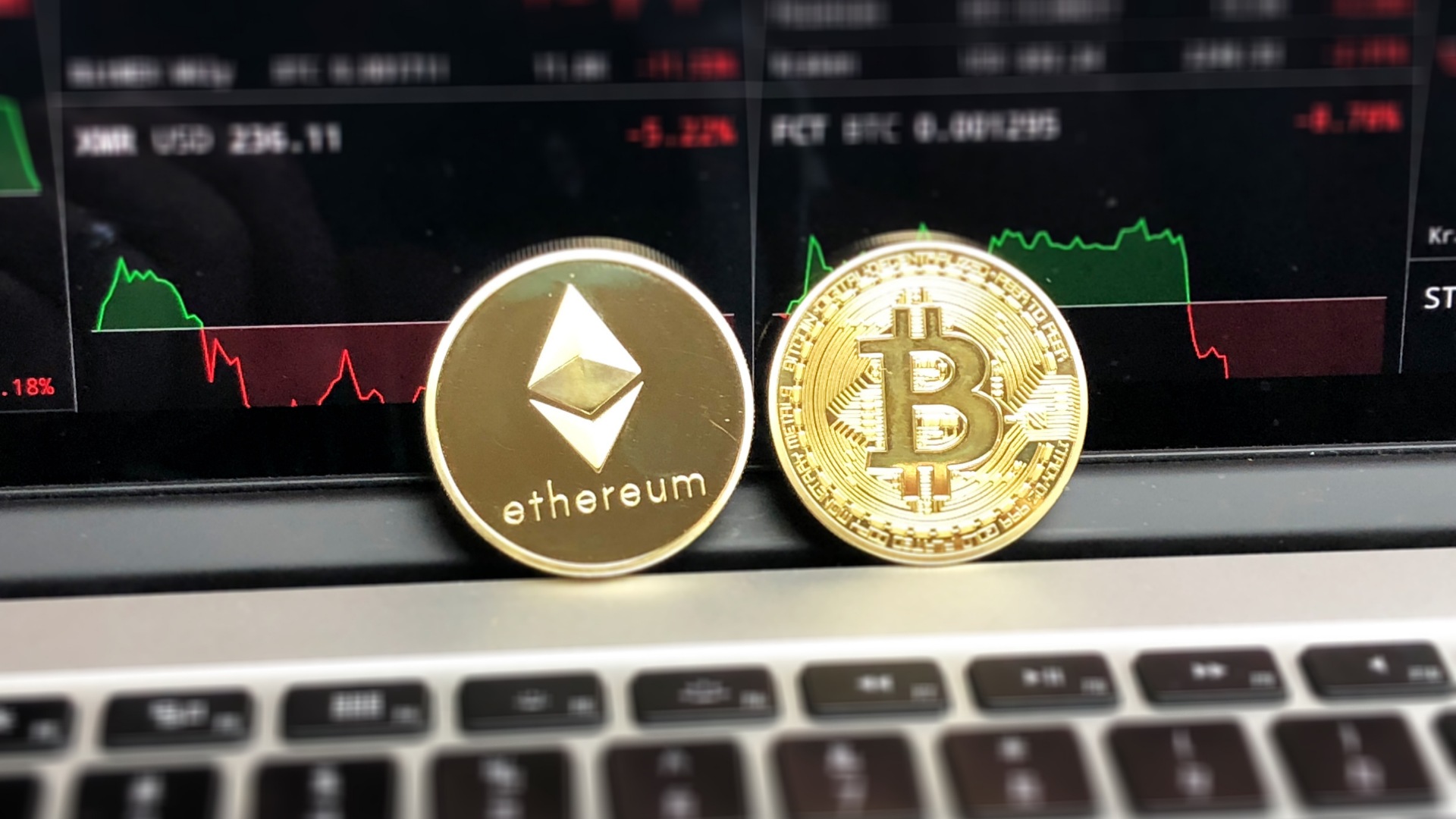
Bitcoin mining is incredibly profitable when compared to the difficulty of mining other cryptocurrencies. That’s because the mining difficulty for Bitcoin is generally much lower than the difficulty for other similar cryptocurrencies. The mining difficulty of Bitcoin is just 0.19%, while that of Ethereum is 100,000%.

Bitcoin mining is an expensive venture for anyone wanting to take part in it. Since the currency is becoming more popular by the day, the industry has been growing exponentially, and so have the costs attached. As a result of this, mining (the process of using computers to solve the puzzle of the Bitcoin blockchain) is no longer worth it for the average computer user. A small farmer would find it difficult to survive at these costs, while a small shop owner would have to shut down.

Like in the old days of currency, Bitcoin mining is a decentralized process that is set to run as long as there are people with unused resources to give it. And like in the old days of currency, there are no guarantees that Bitcoin mining can be done profitably in the future. The world’s most expensive Bitcoin miner is planning on shutting down its operations in November 2013. “The Bitcoin network is so much more than the sum of its parts,” according to Princeton University computer scientist Sam Roweis. “You have to think of it as a vast system of interconnected computers; there’s no machine that can destroy the system.”

Today, most of the Bitcoin mining is done on high-end servers in China. The intense competition to mine Bitcoin has caused many Bitcoin mining companies to emerge. However, Bitcoin mining will eventually end because mining difficulty is increasing. With the increase of mining difficulty, it will deplete the power of mining.

By |2022-01-26T10:17:24+00:00February 26, 2022|Main Blog, World Industries|0 Comments

What is Ethereum, and How Does it Work?

In the last few years, the world has become more connected than ever with our increase in electronic transactions. And with companies taking an added interest to improve their network security measures (for example, seeking assistance from cybersecurity agencies like https://www.fortinet.com/solutions/enterprise-midsize-business/network-security and similar others), it has bettered and enhanced our usage of e-transactions. As a result, this shift has pushed us to make more and more transactions offline, and we are now facing issues regarding an increase in cybersecurity and the possibility of fraud. This is why a new technology has emerged based on the blockchain. That’s right, blockchain technology.

The world of cryptocurrencies is still in its infancy, but the potential impact is huge. Just this summer, we saw the combined market cap of top cryptocurrencies skyrocket from 13 billion to over 516 billion, or $18.5B to over $700B. The cryptocurrency market just keeps growing, and with it, so does the number of investors in it.

Bitcoin isn’t the only cryptocurrency out there. Ethereum, the second-largest one, uses similar blockchain technology and has a very similar purpose. The difference is that instead of a currency, you can use Ethereum for applications that require a lot of computing power. The Ethereum platform is so powerful that it can be used to build apps that don’t even need to be built on top of the blockchain. For example, you could build a social network that doesn’t involve any kind of fee.

Similar to Bitcoin, Ethereum is a virtual currency that runs on a decentralised network of computers or “nodes” that work together. But unlike Bitcoin, Ethereum’s code is public, and its network is powered by Ether, a cryptocurrency that’s traded on cryptocurrency exchanges.

It’s been called “the web of money,” “the internet of information,” and the “world computer.” Ethereum is a decentralised software platform that runs smart contracts: applications that run precisely as programmed. Here, there is no room for third-party interference, censorship, downtime, fraud. Ethereum is an open-source, blockchain-based distributed computing platform that enables developers to build and deploy decentralised applications. Ethereum is a blockchain that lets you create and run smart contracts in layman’s terms. In the meantime, for those wondering how to convert their Ethereum tokens into cash, you can find many blog posts (pop over to this site for more info) and expert guides online that explain this process. Doing a little bit of research beforehand can pay off in the long run, especially with digital currencies like these.

It is a blockchain-based platform that allows developers to build and deploy decentralised apps, also called DApps, that operate autonomously without a middleman. DApps can run a wide variety of smart contracts, which are self-executing programs that automate and enforce the terms of a contract by facilitating secure, direct interaction between peers without the need for a central authority. The DApps built on Ethereum’s blockchain even include nft video games that are unique games played with the help of the Ethereum cryptocurrency.

With around 52 billion, or $70 billion market cap and over 1,000 different projects and applications built on its blockchain, Ethereum is one of the most valuable cryptocurrencies in the world. But what exactly is it? The answer is a little tough to wrap your head around, but Ethereum has a unique and revolutionary technology that allows users to write smart contracts. Smart contracts are essentially computer programs that run on the blockchain and automatically execute when certain conditions are met.

For almost a decade, the world of finance has been looking for a way to replace the traditional banking infrastructure with decentralised systems. In 2009, when Satoshi Nakamoto released his Bitcoin whitepaper, the world had found it. Bitcoin was born as a decentralised digital currency or a currency that was not controlled by any country, group, or financial institution. Digital money was designed to be a peer-to-peer payment system that would allow the transfer of value between two parties without going through a third party, such as a bank or centralised payment processing system. In the past few years, it has become increasingly clear that Bitcoin and other cryptocurrencies are paving the way for the new world of decentralised finance.

Ethereum is an incredibly intriguing new way of creating not only money but quite possibly the world’s best form of security. Vitalik Buterin, a Russian-Canadian programmer, initiated this project. If you aren’t familiar with him, he’s the man who invented the Ethereum platform and co-founded Ethereum.

In late 2013, a mysterious programmer named Vitalik Buterin published a white paper titled “Bitcoin: A Peer-to-Peer Electronic Cash System.” It immediately became a hit within the cryptography community, as white papers are often used to announce a new cryptocurrency. Buterin’s paper described a new kind of digital currency that could process transactions faster than Bitcoin and use blockchain technology to establish trust and security. Shortly thereafter, Buterin created his cryptocurrency and funded the creation of the Ethereum blockchain.

By |2022-01-26T09:42:14+00:00October 20, 2021|Main Blog, World Industries|0 Comments
Go to Top