
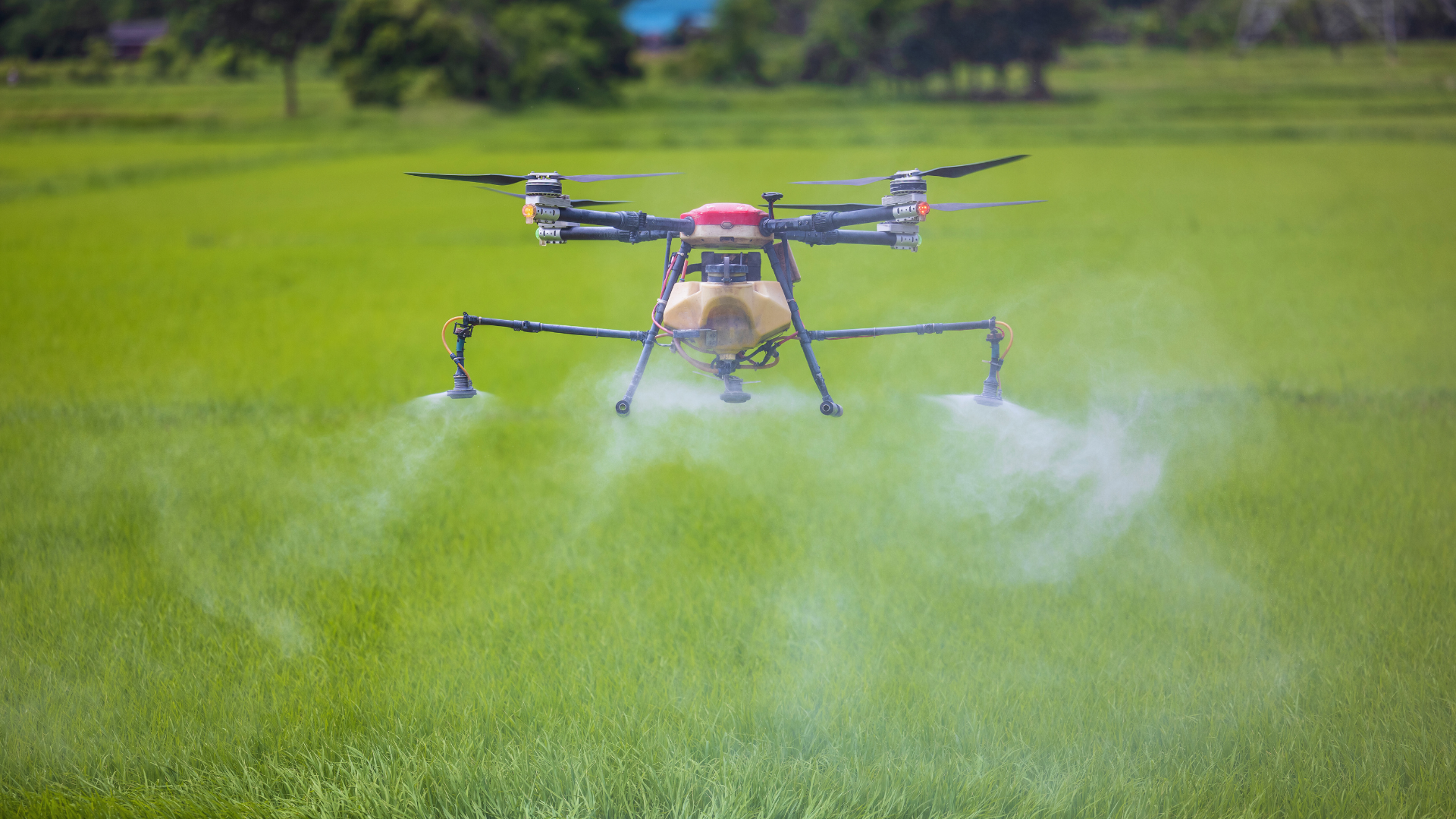
Artificial intelligence is transforming agriculture by making processes more efficient and increasing crop yields. Through AI-powered tools, farmers can monitor soil health, predict weather patterns, and optimise irrigation with greater accuracy. AI helps reduce waste and improve resource management, directly supporting higher productivity in farming.
These advancements enable farmers to make informed decisions faster, reducing guesswork and manual labour. Technologies like drone surveillance and automated machinery contribute to better crop monitoring and timely interventions.
By integrating AI into agricultural practices, the sector benefits from innovation that meets the rising demand for food in a sustainable way. This combination of agriculture and artificial intelligence offers practical solutions to longstanding challenges.
AI-Driven Reforms in Agricultural Productivity
Advances in AI technologies have transformed how farms optimise resources and manage crops. These improvements support higher crop yields, efficient resource use, and more precise decision-making to empower farmers economically and environmentally.
Precision Agriculture Technologies
Precision agriculture uses AI-based technologies to gather and analyse field data for customised farming practices. Machine learning models process satellite imagery, soil sensors, and weather data to guide variable rate applications of water, fertilisers, and pesticides.
This reduces waste, minimises environmental impact, and improves crop health by targeting specific field zones. Smart farming tools, such as drones equipped with deep learning algorithms, monitor plant health in real time, enabling early detection of diseases or nutrient deficiencies.
The integration of decision support systems (DSS) allows farmers to make data-driven choices, which enhances resource allocation and overall field productivity with minimal manual effort.
AI-Powered Crop Yield Forecasting
AI-powered crop yield forecasting employs ML algorithms to analyse historical and real-time agricultural data. These systems predict expected harvest volumes by considering weather patterns, soil quality, planting schedules, and crop conditions.
Such forecasts enable farmers and agribusinesses to optimise supply chains and adjust strategies proactively. They also reduce economic uncertainty by helping farmers plan sales, storage, and resource investments based on predicted output.
Deep learning enhances forecasting accuracy by recognising complex interactions in the data, offering significantly improved yield predictions compared to traditional statistical methods.
Automation and Resource Efficiency
Automation driven by AI in agriculture includes robotic machinery and smart irrigation systems that execute field tasks with precision. These technologies reduce labour costs and improve operational efficiency by working continuously under variable conditions.
AI algorithms coordinate machinery movements and resource delivery, optimising fuel, water, and nutrient usage. For example, autonomous tractors use AI-powered sensors and GPS to perform planting or harvesting with minimal overlap or soil compaction.
Increased automation supports sustainable farming by conserving resources and lowering input expenses while maintaining consistent crop yields, which contributes positively to economic stability in agricultural sectors.
Innovative Applications for Enhancing Yield and Sustainability
AI technologies allow farmers to detect problems early, manage resources efficiently, and improve crop genetics. These advancements focus on precise data collection and analysis, leading to reduced waste and higher productivity.
Early Crop Disease and Pest Detection
AI models, especially convolutional neural networks (CNNs), support early crop disease detection through image-based classification. Farmers and agronomists use drones and smartphones equipped with cameras to capture plant images.
These AI systems analyse leaf patterns and colour changes to identify diseases like fungal infections or pest infestations before symptoms become severe. The integration of long short-term memory (LSTM) networks helps predictive modelling by considering environmental factors over time.
Early intervention reduces crop loss and lowers pesticide usage, improving sustainability. This automated detection outperforms manual scouting in speed and accuracy, ensuring timely pest control and disease management.
Smart Irrigation and Soil Monitoring
AI-driven smart irrigation systems rely on IoT sensors to provide real-time soil moisture data. Soil sensors continuously assess soil health, temperature, and moisture, enabling precision irrigation that adjusts water delivery based on actual need.
Integration with weather forecasts allows predictive watering schedules, reducing water waste during droughts or heavy rains. This combination limits over-irrigation, saving water and preventing crop stress caused by fluctuating soil conditions.
These systems use machine learning algorithms to optimise water use, adapting to climate change impacts. The result is improved crop yield, healthier plants, and increased resource efficiency.
Targeted Fertilisation and Spraying
AI enables targeted fertilisation by analysing soil nutrient levels and crop requirements through sensor data and satellite imagery. Farmers apply fertilisers precisely where needed, avoiding uniform distribution.
Machine learning models predict nutrient deficiencies and calculate optimal dosages for different field sections. This approach reduces chemical runoff and environmental impact while improving crop nutrition.
Similarly, AI-guided spraying treatments use drones and ground robots to apply pesticides only on affected plants, enhancing pest control efficiency. These methods reduce input costs and promote sustainable farming practices by minimising unnecessary chemical use.
AI in Plant Breeding and Genetic Improvement
AI accelerates plant breeding by analysing large datasets from genotyping and phenotyping. Algorithms like artificial neural networks (ANN) identify desirable traits linked to yield, disease resistance, and climate adaptability.
Predictive models evaluate hybrid combinations faster than traditional methods, saving years in crop improvement cycles. This supports breeding crops that withstand climate-related stresses such as droughts or pests.
AI tools also facilitate genome editing decisions and help breeders prioritise genetic traits for future cultivation. This targeted approach increases crop performance and sustainability in diverse environments.
AI Accessibility, Smallholder Support, and Sustainable Practices
AI tools are increasingly tailored to meet the specific needs of smallholder farmers, balancing food security goals with environmental concerns. Access to affordable technologies and reliable data is critical for effective and sustainable agricultural decisions.
Empowering Small-Scale and Smallholder Farmers
AI-driven platforms provide smallholder farmers with real-time crop monitoring, pest detection, and weather forecasting. Such tools help optimise input use, reducing costs and improving yields.
Mobile apps tailored for low-literacy users allow easier adoption and decision-making support. This improves food security in regions where small-scale farming is predominant.
Affordable sensors and drones also enable farmers to analyse soil health and plant conditions at the field level. These technologies increase productivity but require access to reliable infrastructure and training.
Sustainable Farming Through AI
AI improves sustainability by promoting precision agriculture, which limits excessive fertiliser and pesticide use. This reduces environmental damage and conserves resources.
Machine learning models assess long-term soil health and water use, helping farmers adopt crop rotations and cover cropping. These practices enhance soil fertility while supporting biodiversity.
AI systems can forecast climate impacts, encouraging farmers to adjust planting times and crop varieties. This adaptation supports sustainable farming practices aligned with environmental changes.
Challenges of Data Quality and Privacy
Accurate AI predictions depend on high-quality, localised data, which is often lacking in smallholder contexts. Poor data can lead to ineffective recommendations and increased risks.
Data privacy is a concern as farmers share sensitive information on farm inputs and production. Without clear regulations, there is potential for misuse or exploitation.
Ensuring transparency and control over data use is critical to building trust among smallholder communities. Efforts must balance data collection needs with farmers’ rights to privacy.









Leave A Comment